Toilets that run, rock or leak
A toilet that runs on its own, or refills when nobody has used it, usually has a worn flapper or a tired fill valve. Over time, the disinfectant in treated water wears out the rubber parts in the tank.
If the toilet rocks, or water shows up around the base after a flush, the seal underneath has failed, and that dirty water soaks into the floor. We pull the toilet, check the flange and bolts, and reset it on a new seal.
Clogs that keep coming back are a job for drain cleaning. When a toilet is past saving, we put in a new one.
Dripping faucets and leaks under the sink
Most drips come from a worn cartridge or washer inside the faucet. Grit and mineral buildup wear those parts down and stiffen the handles.
For a leak under the sink, put a dry paper towel under each connection and run the water. The towel that gets wet shows you the leak.
If it's a good faucet and parts are still made, we rebuild it. If it's old or corroded, a new one makes more sense, and we put in kitchen, bathroom and laundry faucets.
Garbage disposals
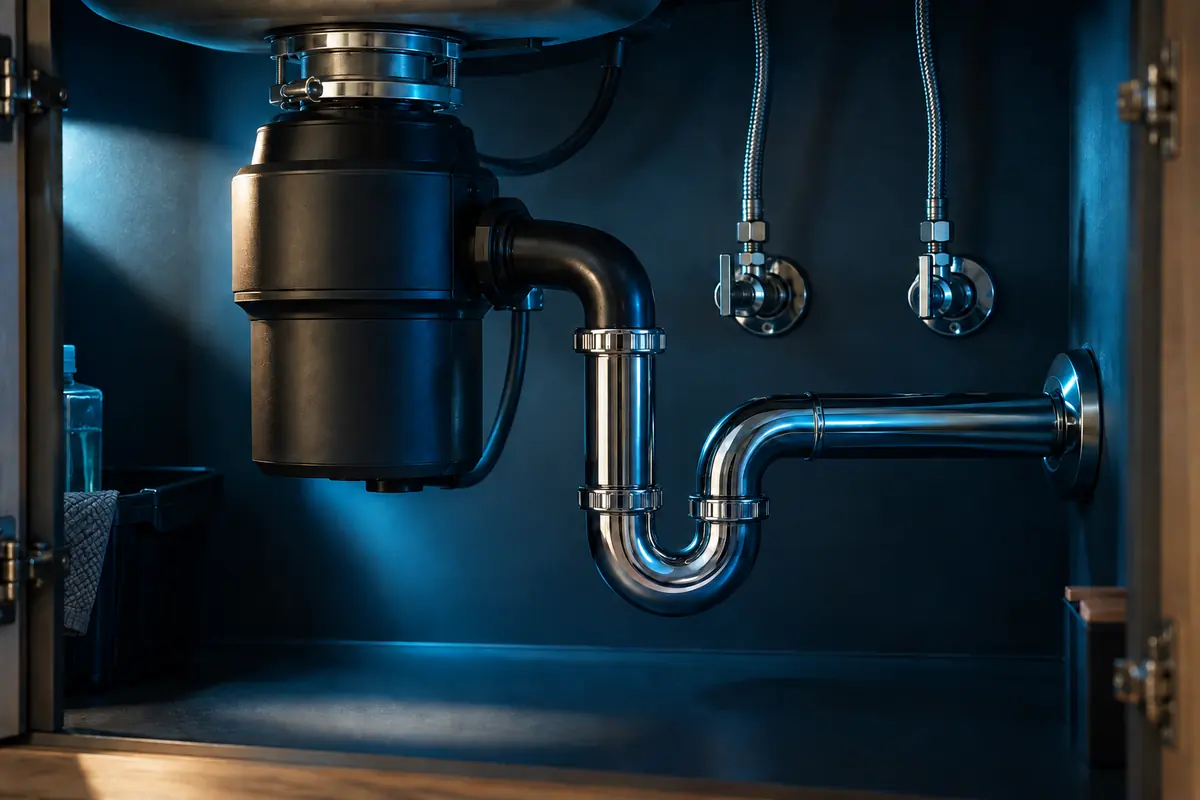
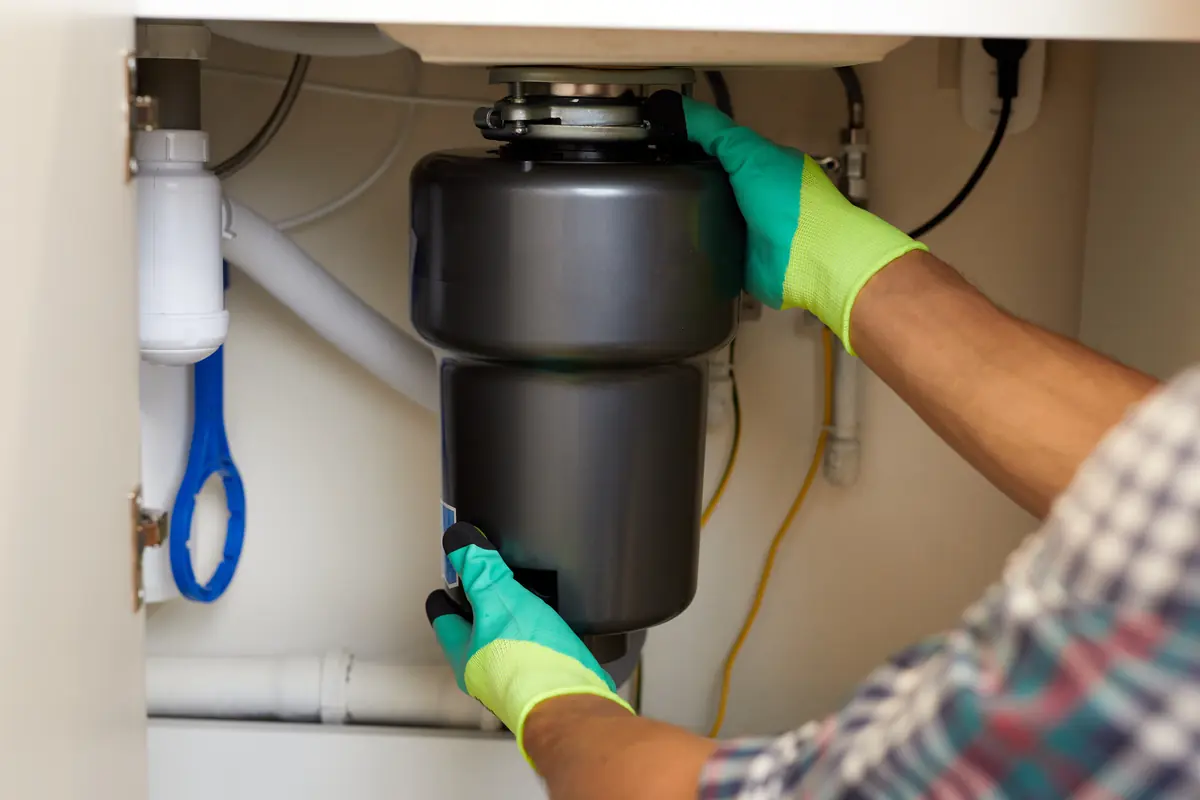
A disposal that hums but won't spin is jammed, and you can often free it yourself.
Turn it off
Switch it off at the wall, and unplug it if it plugs in under the sink. Never put your hand inside.
Free the jam
Most disposals have a hex socket in the center of the bottom. Work an Allen wrench back and forth in it until the motor turns freely.
Press reset
Push the reset button on the bottom. If it won't stay in, let the motor cool a few minutes and try again.
Know when it's done
Water dripping from the bottom means the seal inside has failed and the disposal needs replacing. When we put in a new one, we knock out the plug in its dishwasher inlet so the dishwasher still drains.
Shower valve repair and replacement
A shower that drips, swings between too hot and too cold, or has a stiff handle most likely needs a new cartridge. Mineral buildup and grit in the water are common reasons cartridges quit.
We can usually change one from the front without touching the tile. The part has to match the brand of the valve in the wall, so a photo of your handle and trim helps.
If the valve body has failed, or you want a different style, we replace the whole valve, which means opening the wall from the back or through the tile. We'll tell you which before we start and keep the opening as small as we can. New valves come with scald protection, which matters most when kids or older folks use the shower.
Outdoor faucets, supply lines and shutoff valves
Outdoor faucets and hose bibs
A drip from the spout usually means a worn washer. A frost-free faucet left with a hose on in a freeze can split inside the wall, where you won't see the leak until you use it again. We put in frost-free hose bibs with a built-in vacuum breaker.
Supply lines
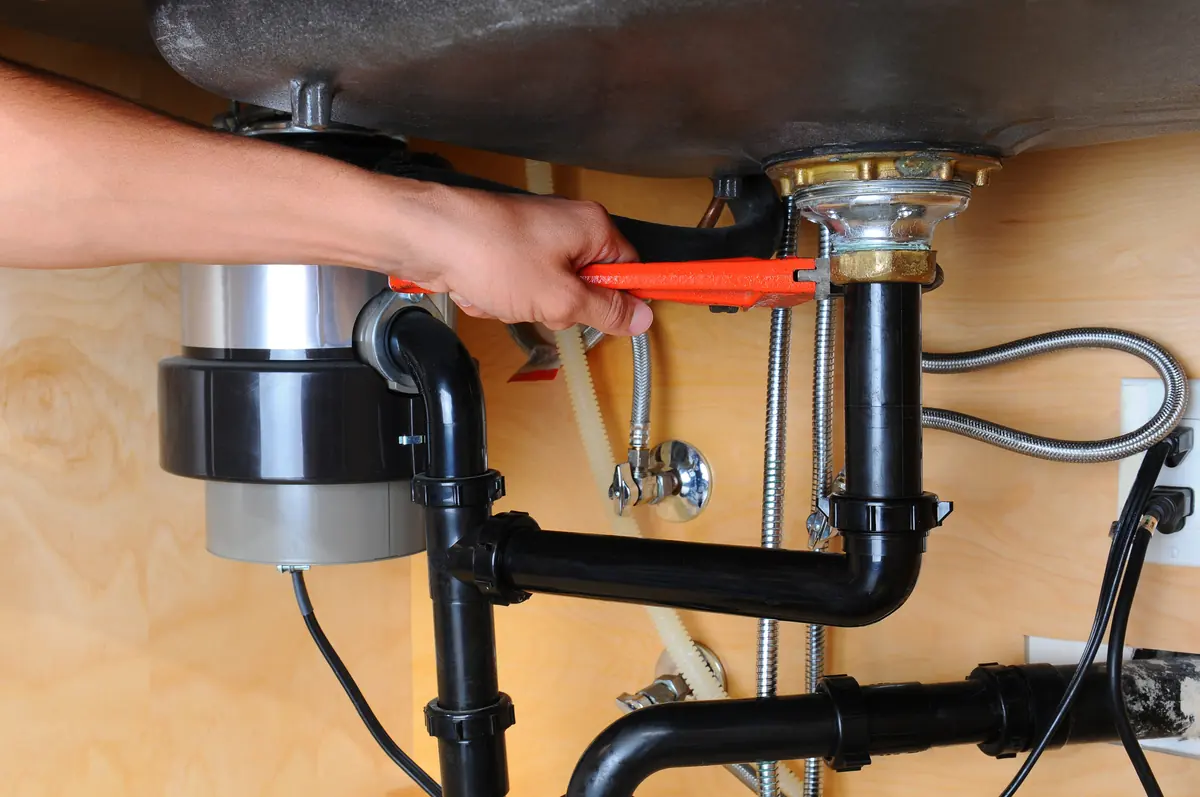
Flexible lines to toilets, faucets and ice makers wear out, and old plastic or rubber ones can split. We replace them with braided stainless. For a leak in the pipe itself, see water line repair.
Shutoff valves
Valves under sinks and toilets often stick or leak the first time anyone turns them in years, so we swap in quarter-turn valves. Test your main shutoff before winter with our freeze prep guide.
Pressure regulators and high water pressure
A worn-out pressure regulator, or no regulator at all, lets more pressure into the house than fixtures are built for. You'll see some of these:
- Pipes that bang when a faucet or the washer shuts off
- Toilets that start running again soon after a repair
- Faucets that drip again soon after a new cartridge
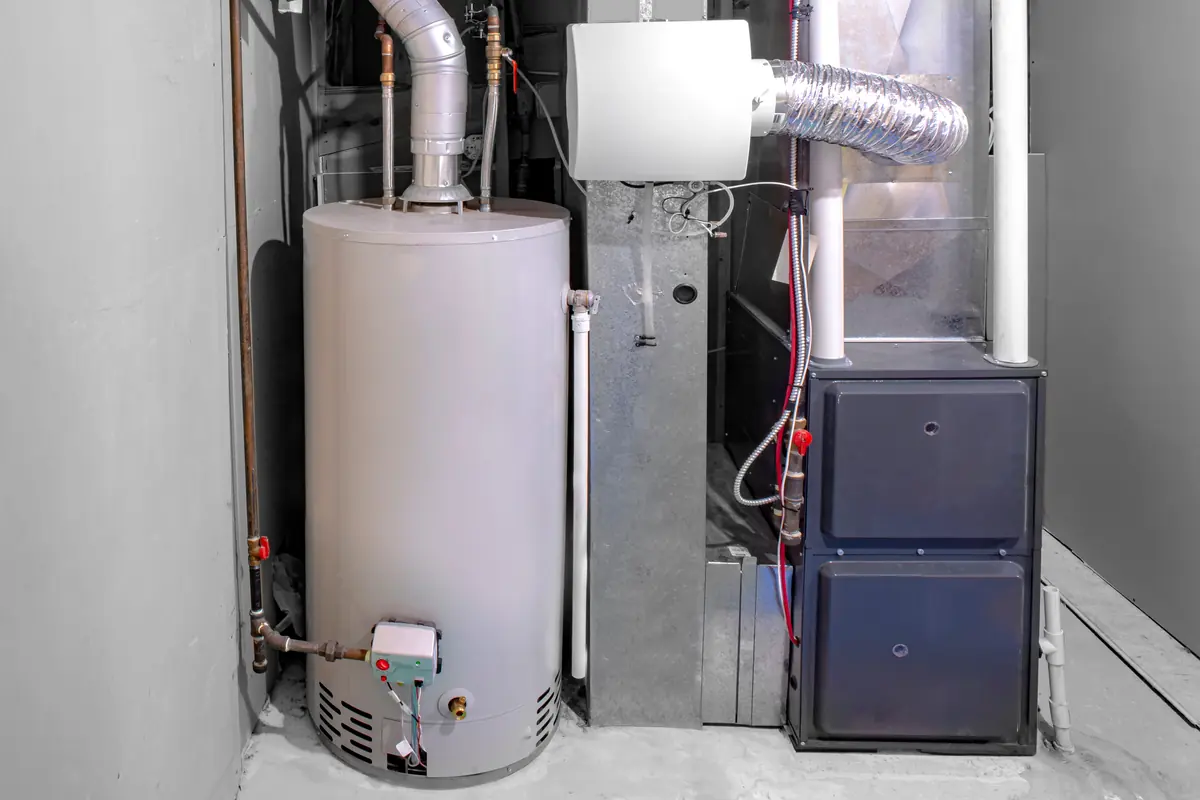
- A water heater relief valve that drips
- Pressure that swings between strong and weak
We test with a gauge on an outside faucet. Plumbing codes call for a regulator when static pressure runs over 80 psi, and when we add one, we check whether your water heater needs an expansion tank.
Questions we hear about plumbing repair
Do you take small jobs?
Yes. One running toilet or one dripping faucet is worth the trip. If you have a few small things, list them and we'll handle them in one visit.
Can I buy my own faucet or toilet and have you install it?
Yes, we'll install fixtures you bought yourself. Before you buy, send a photo of what's there now through our contact page. Faucets have to match the holes in the sink, and most toilets fit a drain 12 inches from the wall, though some older homes have 10 or 14.
Should I repair or replace a leaky faucet?
Repair it if it's a decent faucet and parts are still made. Replace it if it's old, corroded, or the leak keeps coming back.