Gas leak repair
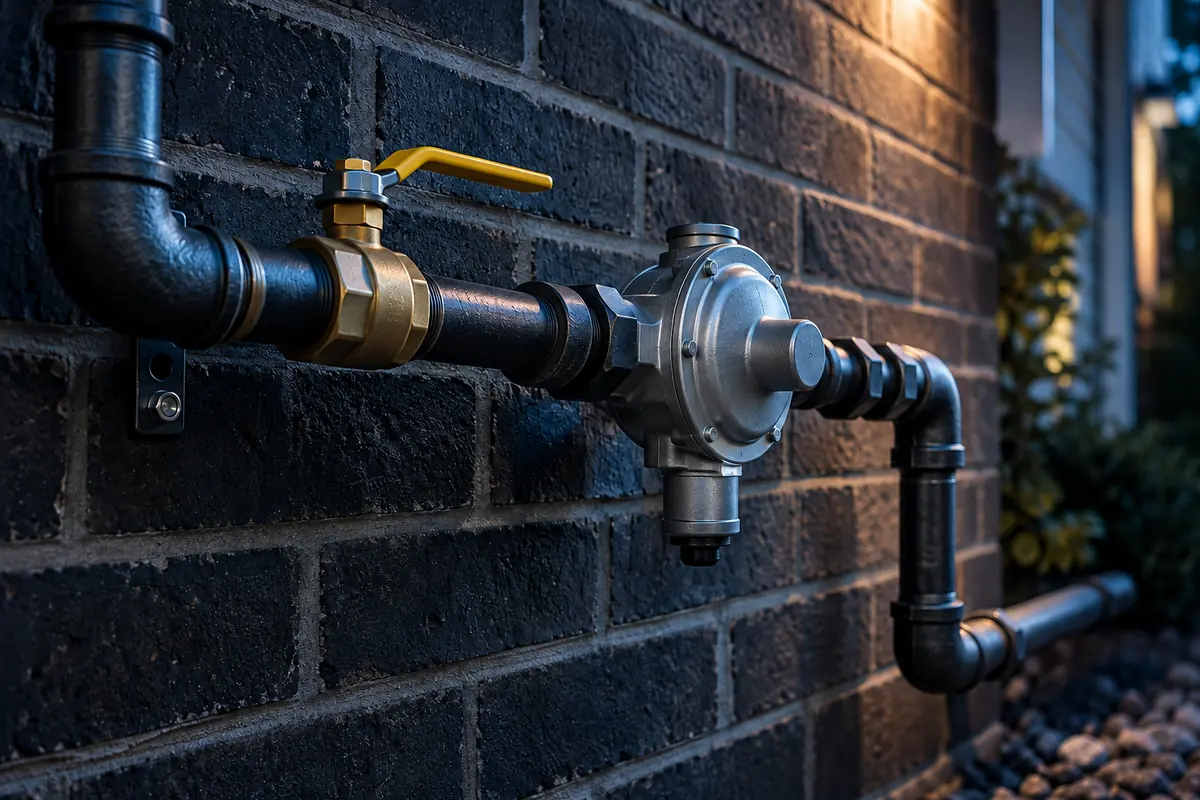
Leaks usually start at a joint: a loose fitting, an old valve, or the flexible connector behind a range or dryer. Buried steel lines to a shop, barn or pool heater can rust through, and a shovel or post-hole digger can hit any buried line.
We find the leak with leak-test fluid and an electronic gas detector, repair or replace the bad section, and test the line before turning the gas back on. Then we relight the pilots and check each appliance.
Older ranges and dryers may still have an uncoated brass connector. The Consumer Product Safety Commission says to replace those, and to have someone qualified check yours, since moving the appliance even slightly can make an old one fail.
Signs of a gas leak
Natural gas and propane both carry an added odor, but a leak can show up in other ways too:
- A rotten-egg or sulfur smell, inside or outside
- A hiss or whistle near a gas line, meter or appliance
- A strip of dead or yellow grass over a buried line
- Bubbles in a puddle or muddy spot over a line
- A gas bill or propane use that jumps for no reason
If you notice any of these, get outside and call from there.
New lines for appliances, generators and outdoor kitchens
Ranges and cooktops
Going from electric to gas, or moving the range, takes a new line, a shutoff valve you can reach and a new connector.
Dryers
A gas dryer needs a line to the laundry room, its own shutoff valve and a new connector.
Water heaters and tankless units
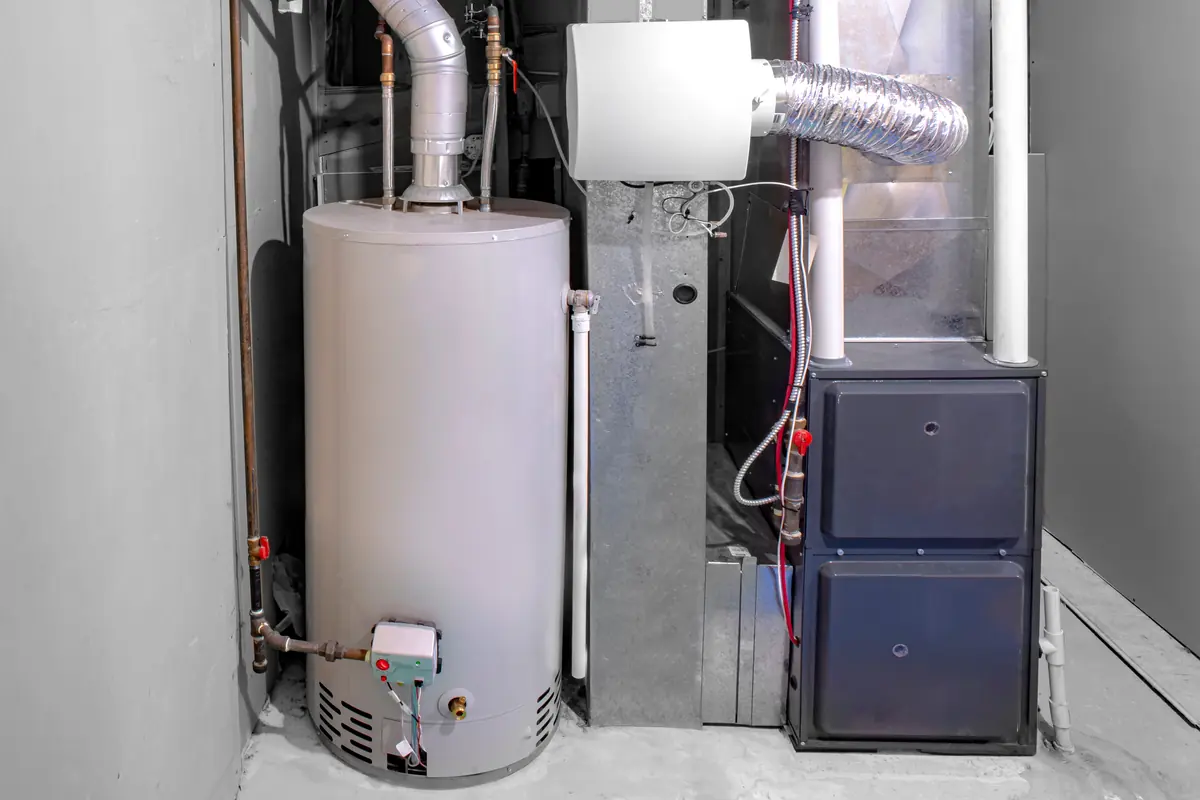
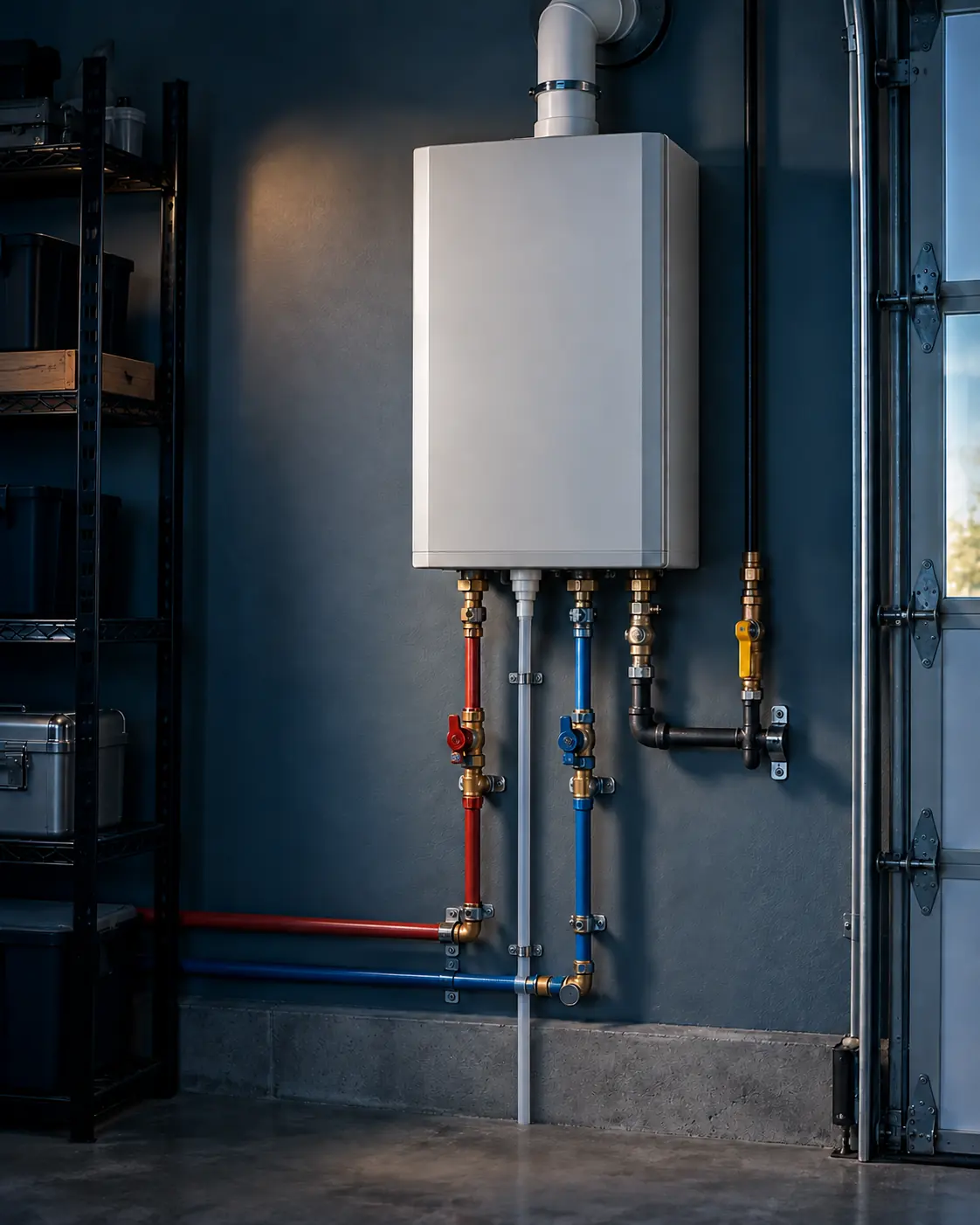
A tankless water heater burns far more gas at full fire than a tank, so the line often has to be bigger. See tankless water heaters and water heater repair.
Standby generators
A whole-house generator needs a line sized for its full load. On propane, ask your supplier whether the tank is big enough. An electrician handles the wiring and transfer switch.
Outdoor kitchens, grills and fire pits
A buried line to the patio needs pipe rated for underground use and a shutoff you can reach. Every trench starts with a call to 811 so buried utilities get marked first.
How a gas pressure test works
We seal off the line, fill it with air and watch a gauge to make sure it holds before any gas goes back in.
Close it off
We cap the open ends and isolate the section from the meter or tank.
Put it under pressure
We pump air into the line to the test pressure the code calls for, well above what the gas runs at.
Watch the gauge
The gauge has to hold steady for the full test time. If it drops, we find the leak, fix it and test again.
Turn the gas back on
We purge the air, relight the pilots and check every appliance. When the job needs a city permit, we pull it, and the inspector checks the test.
Natural gas and propane
Homes in town are usually on natural gas from a main. Out in the county, gas means propane from a tank in the yard.
| Natural gas | Propane | |
|---|---|---|
| Where it comes from | A gas company main, through a meter | A tank on your property, filled by a supplier |
| Who to call about a leak | Your gas company, or 911 | Your propane supplier, or 911 |
| Where leaking gas goes | It rises, since it's lighter than air | It sinks into low spots like crawl spaces, since it's heavier than air |
| Appliances | Set up for natural gas | Set up for propane. Some can be converted, some can't. |
| Who can work on the lines | A licensed plumber | A master or journeyman plumber registered with the Texas Railroad Commission, or a Railroad Commission LP-gas licensee |
We work on both, and our license is registered with the Railroad Commission for propane work.
Questions we hear about gas lines
Who is responsible for the gas line to my house?
On natural gas, the gas company is responsible up to the meter, and everything past it is yours, including buried lines to a shop, pool heater or grill. Federal pipeline rules have gas companies tell customers they don't maintain that buried piping, and recommend having it checked for leaks and, if it's metal, for corrosion.
Is my gas line big enough for a tankless water heater or generator?
Often it isn't. A tankless heater or standby generator can burn as much gas as several other appliances combined, so we add up what's on the line, measure the run and size the pipe to match. Ask us before you buy one.
What should I do if my propane tank runs out?
Turn off your gas appliances, call your propane supplier, and don't try to relight anything yourself. A propane system that runs empty has to be checked for leaks before it goes back into service.